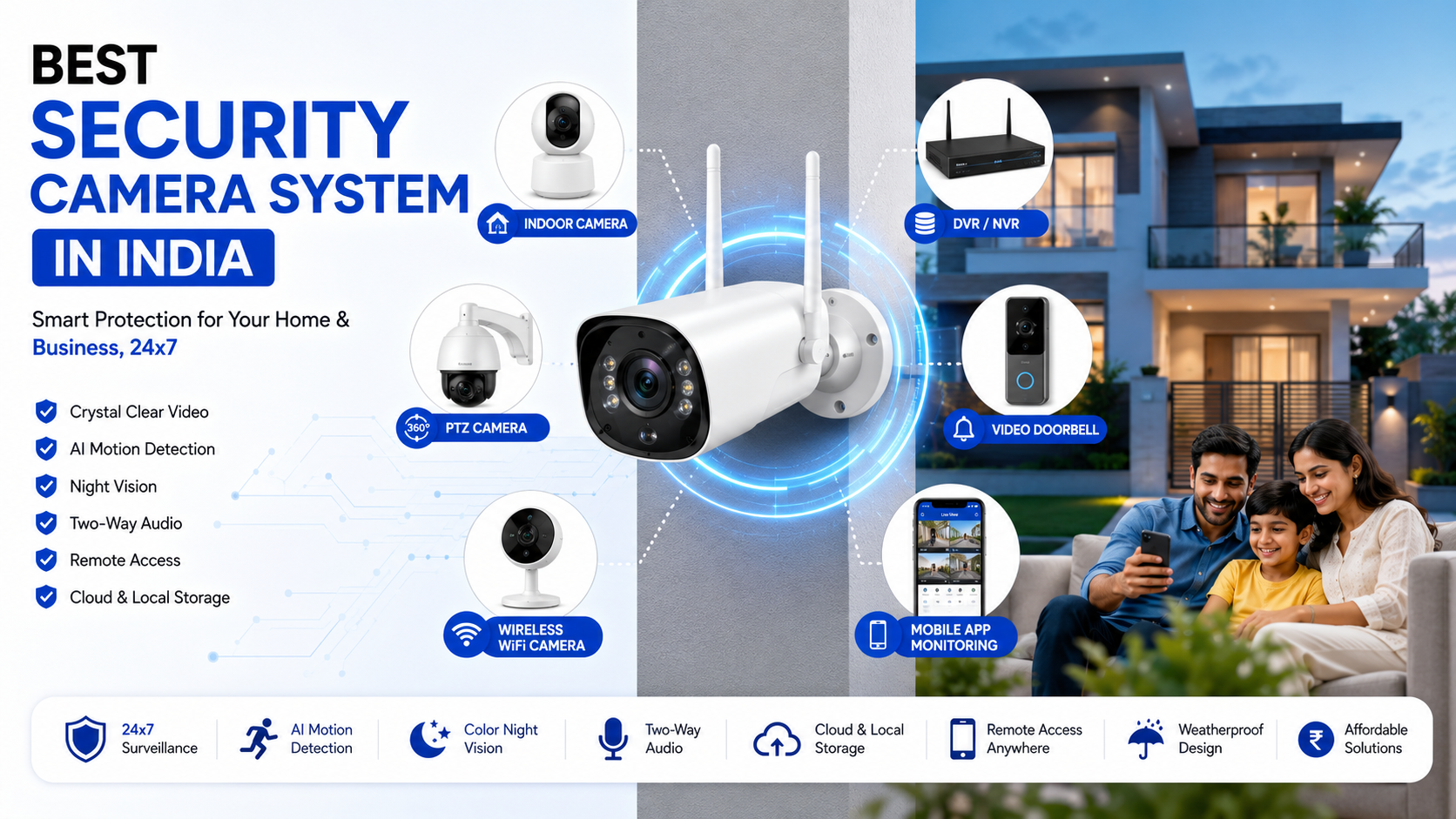
Looking for the best security camera system in India? Explore the top smart CCTV cameras, buying guide, features, comparisons, and expert tips to choose the right one in 2026.
Best Security Camera System in India (2026) Complete Buying Guide
Home security is no longer a luxury in India—it’s becoming a necessity. Whether you live in a bustling metro city like Delhi, Mumbai, Bengaluru, or a quieter town, protecting your home, family, and valuables has become more important than ever. Rising concerns about theft, package deliveries, unauthorized visitors, and even monitoring elderly parents or pets have encouraged millions of Indian households to invest in smart security solutions.
The good news is that modern security camera systems are far more advanced than they were just a few years ago. Today’s cameras offer crystal-clear video quality, AI-powered human detection, two-way communication, color night vision, cloud storage, smartphone alerts, and even integration with Google Assistant and Amazon Alexa.
However, choosing the best security camera system isn’t as simple as buying the most expensive camera available. Different homes require different types of surveillance. A small apartment has completely different security needs compared to an independent villa, office, warehouse, retail shop, or farmhouse.
Many buyers make the mistake of purchasing a camera based solely on price or megapixels. Later, they realize that the camera doesn’t support night vision properly, lacks reliable mobile notifications, or requires expensive monthly subscriptions. Understanding your requirements before making a purchase can save both money and frustration.
In this comprehensive guide, you’ll learn everything you need to know before investing in a security camera system in India. We’ll cover the different types of CCTV cameras, essential features, indoor versus outdoor surveillance, wired versus wireless systems, storage options, and expert tips to help you choose the right solution for your budget and needs.
Whether you’re buying your first smart camera or planning to upgrade an existing CCTV setup, this guide will help you make an informed decision.
Why Every Indian Home Needs a Security Camera System
A decade ago, CCTV cameras were mainly installed in banks, shopping malls, offices, and commercial buildings. Today, affordable smart cameras have made home surveillance accessible to almost everyone.
There are several reasons why homeowners are increasingly installing security cameras.
The first and most obvious benefit is crime prevention. Visible security cameras often discourage burglars and trespassers from attempting unauthorized entry. Even if an incident occurs, recorded footage can become valuable evidence for police investigations.
Another major reason is remote monitoring. Whether you’re traveling for work or visiting relatives in another city, you can check your home in real time through your smartphone. This provides peace of mind that wasn’t possible with traditional CCTV systems.
Parents also use indoor cameras to monitor children after school. Similarly, many families use cameras to keep an eye on elderly family members, ensuring they are safe while living alone during the day.
Pet owners appreciate security cameras because they can interact with their pets using two-way audio. Some cameras even notify you when unusual movement is detected.
For small businesses, cameras help monitor employees, customer interactions, cash counters, and inventory while reducing theft and improving accountability.
What Is a Security Camera System?
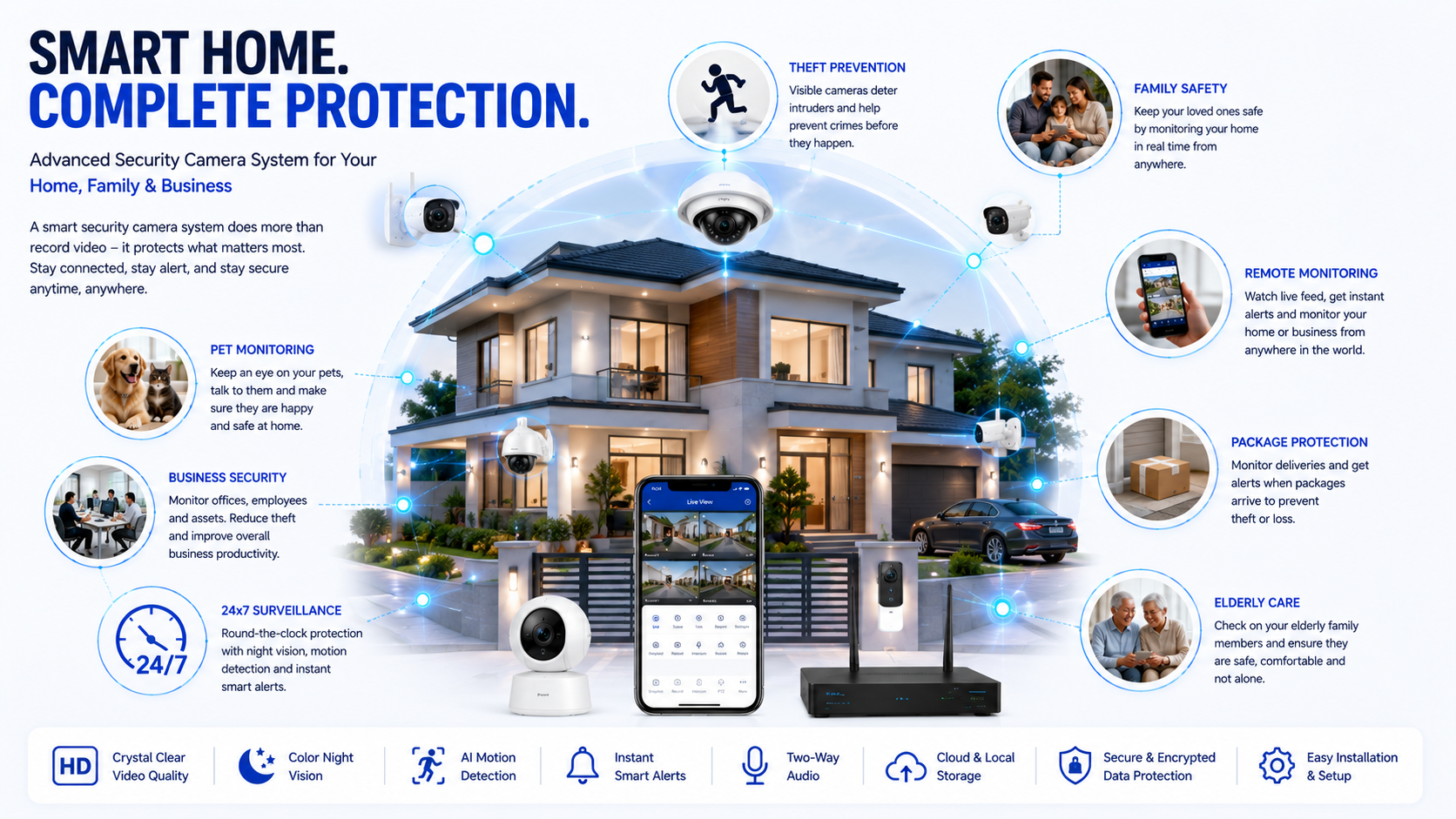
A security camera system is a combination of surveillance cameras, recording devices, storage, networking equipment, and software that work together to monitor and record activities within a specific area.
Modern systems usually include:
- Indoor cameras
- Outdoor weatherproof cameras
- Video recording system
- Mobile application
- Motion detection
- Night vision
- Cloud or local storage
- AI-powered alerts
Unlike older CCTV setups that required constant manual monitoring, smart security systems automatically notify users whenever suspicious activity is detected.
Types of Security Camera Systems
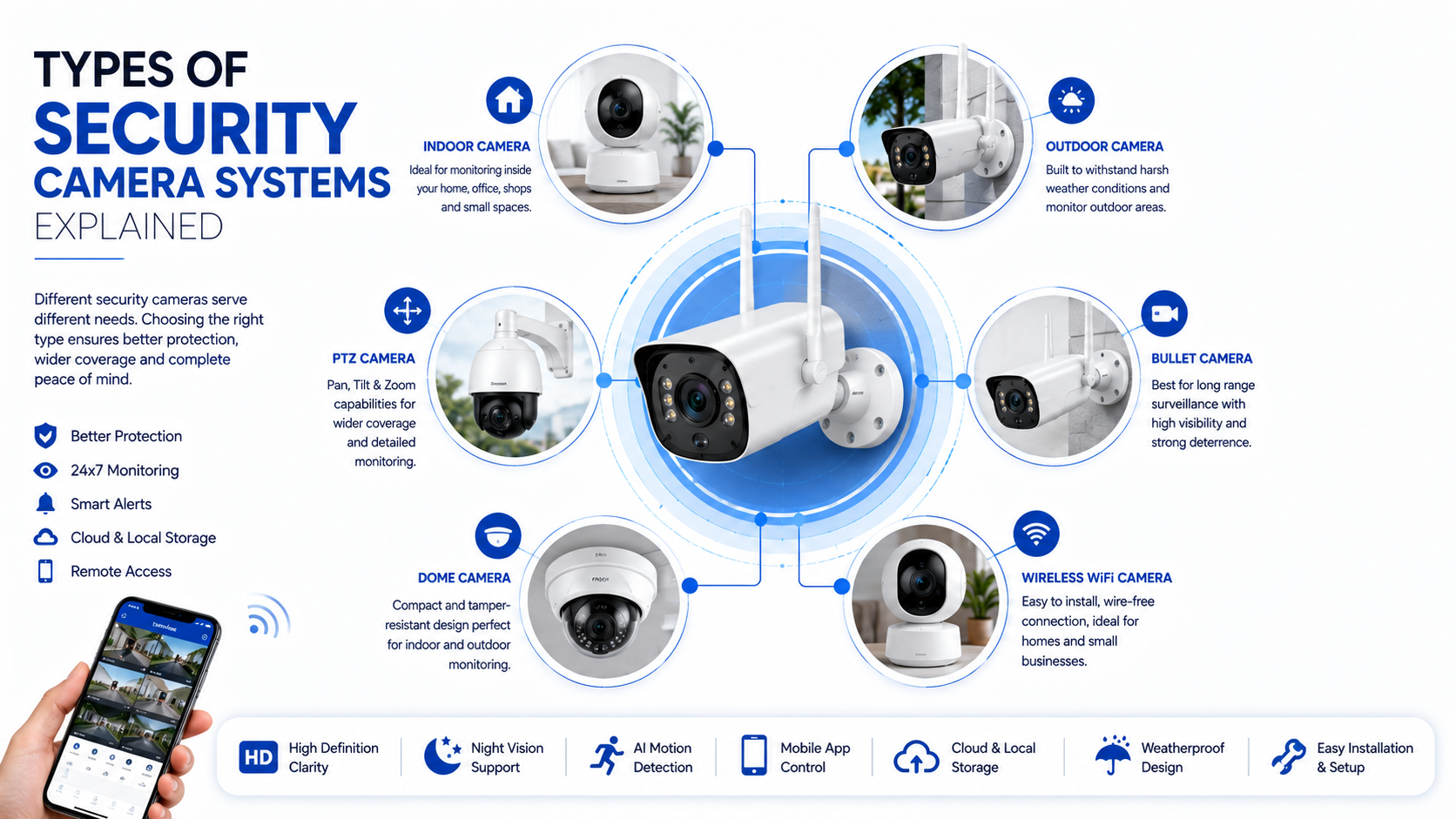
Choosing the right camera starts with understanding the different types available.
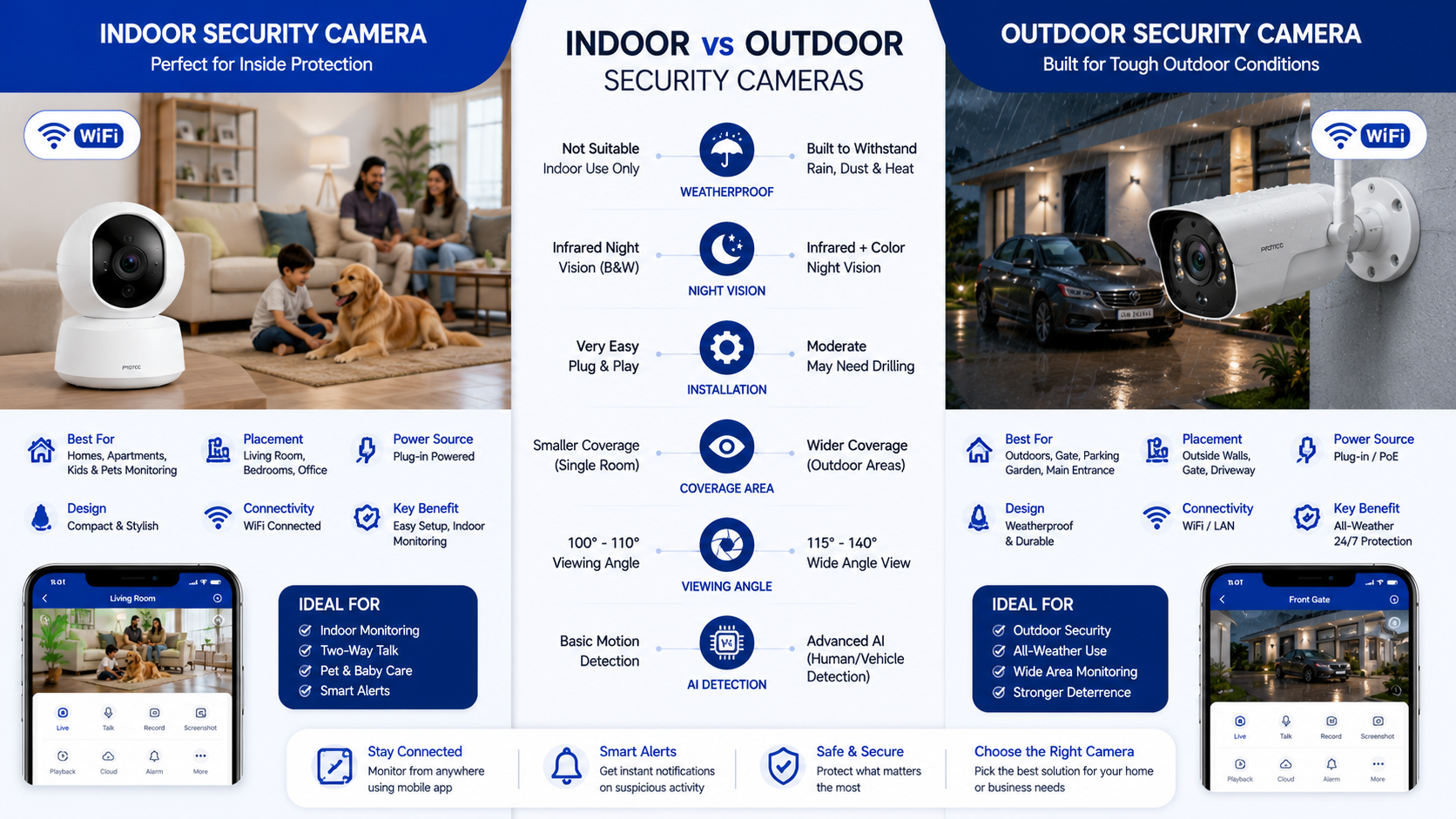
Indoor Security Cameras
Indoor cameras are designed to monitor activities inside your home.
These cameras are compact, stylish, and usually easy to install. Most support Wi-Fi connectivity, allowing users to access live video from anywhere.
Indoor cameras are ideal for:
- Living rooms
- Bedrooms
- Kids’ rooms
- Home offices
- Pet monitoring
- Elderly care
Most indoor cameras also include two-way audio, making communication easy through a smartphone.
Outdoor Security Cameras
Outdoor cameras are built to withstand rain, heat, dust, and humidity.
Unlike indoor cameras, they feature weatherproof construction, stronger infrared LEDs for night vision, and wider viewing angles.
Outdoor cameras work best for monitoring:
- Main entrance
- Parking area
- Garden
- Driveway
- Terrace
- Building perimeter
Many premium outdoor cameras now support color night vision instead of traditional black-and-white infrared recording.
Wired Security Camera Systems
Wired systems remain popular among commercial establishments and large homes.
Advantages include:
- Stable connection
- Continuous recording
- Better video quality
- Less interference
- Long-term reliability
However, installation requires professional wiring, making initial setup more expensive.
Wireless Security Camera Systems
Wireless cameras have become the preferred choice for Indian homeowners.
Instead of running long cables throughout the house, these cameras connect through Wi-Fi.
Benefits include:
- Easy installation
- Flexible placement
- Smartphone access
- Smart notifications
- Affordable pricing
The only requirement is a reliable internet connection and a stable Wi-Fi signal.
Battery-Powered Cameras
Battery-powered cameras are excellent for locations where power wiring isn’t practical.
These cameras can operate for several months on a single charge depending on usage.
They’re commonly installed in:
- Farmhouses
- Temporary construction sites
- Rental properties
- Vacation homes
Many models also support solar charging accessories.
PTZ (Pan-Tilt-Zoom) Cameras
PTZ cameras provide significantly wider coverage than fixed cameras.
Users can remotely rotate, tilt, and zoom the camera directly from the mobile app.
These are ideal for:
- Large warehouses
- Parking lots
- Villas
- Offices
- Retail stores
Some advanced PTZ cameras automatically track moving people using AI.
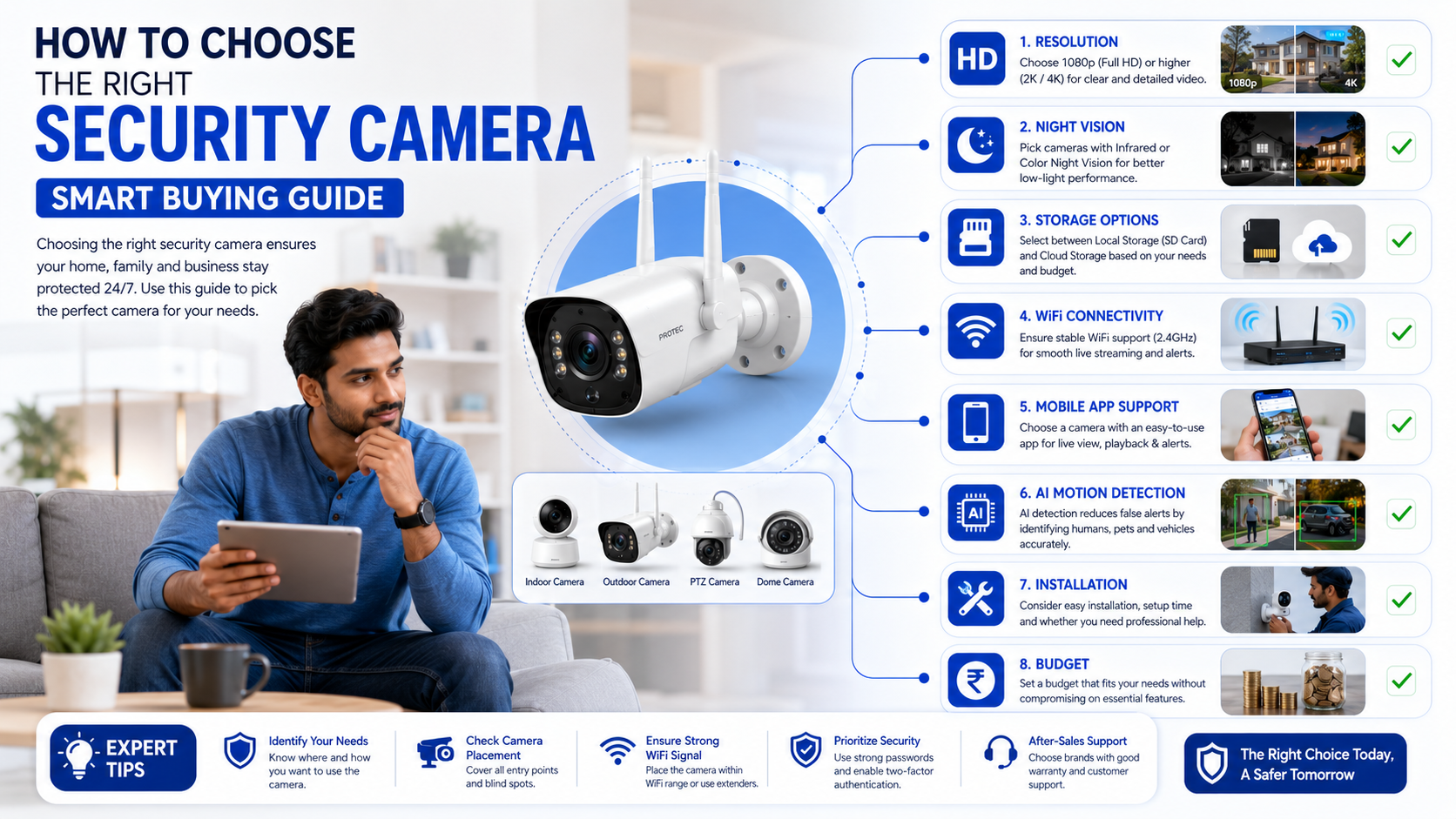
Essential Features to Look for in the Best Security Camera System
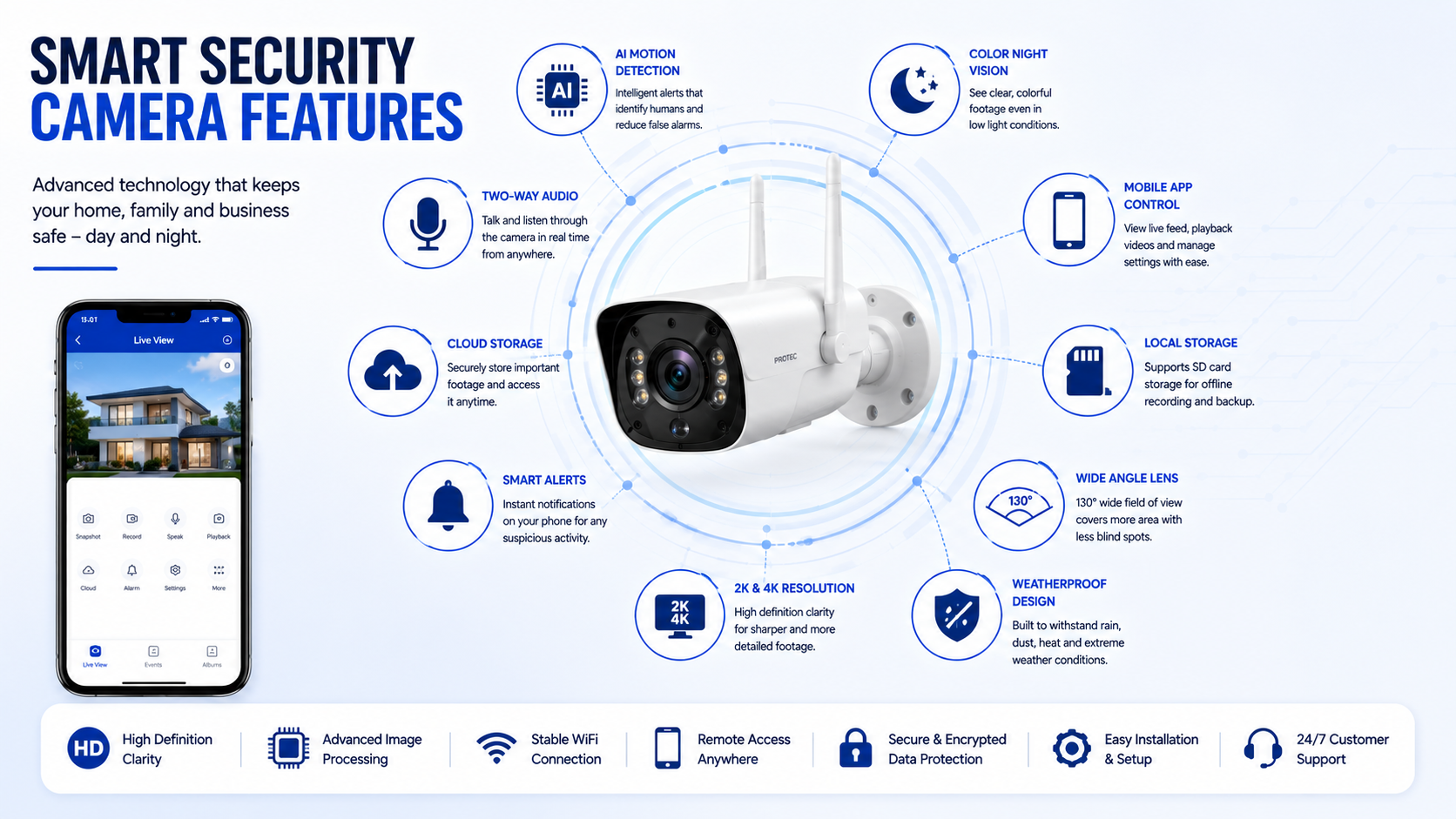
Many buyers compare cameras only by price. However, the real value lies in the features that improve reliability, image quality, and ease of use.
Let’s explore the most important ones.
High Video Resolution
The clarity of recorded footage depends largely on resolution.
Common options include:
- 1080p Full HD
- 2K
- 3MP
- 4MP
- 5MP
- 4K Ultra HD
For most Indian homes, Full HD or 2K resolution provides an excellent balance between image quality and storage usage.
If you’re monitoring a large property or need to identify faces and vehicle number plates clearly, 4K cameras are worth considering.
Night Vision Performance
Most security incidents occur after sunset.
Good night vision is therefore one of the most critical features.
Today’s cameras typically offer:
Infrared Night Vision
Produces clear black-and-white footage even in complete darkness.
Color Night Vision
Uses built-in spotlights or advanced sensors to capture colorful footage at night.
Color recording makes it easier to identify clothing, vehicles, and faces.
AI Motion Detection
Traditional cameras recorded every movement, including trees, rain, insects, and passing vehicles.
Modern AI cameras are much smarter.
They can distinguish between:
- Humans
- Animals
- Vehicles
- Packages
- General motion
This greatly reduces unnecessary notifications.
Two-Way Audio
Two-way communication allows users to speak directly through the camera.
This feature is especially useful for:
- Talking to delivery executives
- Greeting visitors
- Warning suspicious individuals
- Communicating with children
- Calming pets
The built-in microphone and speaker work through the companion mobile application.
Mobile App Integration
A quality security camera system should provide seamless smartphone access.
Through the mobile app, users can:
- Watch live video
- Review recordings
- Receive instant alerts
- Change camera settings
- Download clips
- Share footage
- Control multiple cameras
An intuitive app significantly improves the overall user experience.
Cloud Storage vs Local Storage
One of the biggest decisions buyers face is choosing between cloud storage and local storage.
Local Storage
Most cameras support microSD cards that store footage directly inside the device.
Advantages include:
- No monthly fees
- Offline recording
- Complete ownership of footage
However, if the camera is stolen or damaged, stored recordings may also be lost.
Cloud Storage
Cloud recording stores footage securely on remote servers.
Benefits include:
- Access recordings anywhere
- Data remains safe even if the camera is damaged
- Easier sharing
- Better backup protection
The downside is that many cloud services require a monthly or yearly subscription.
For many Indian households, a hybrid setup that combines local storage with optional cloud backup offers the best balance between cost and security.
Wide Viewing Angle
A wider viewing angle allows one camera to monitor a larger area, reducing the need for multiple installations.
Most modern cameras offer viewing angles between 110° and 140°, while PTZ models can cover almost an entire room by rotating automatically.