
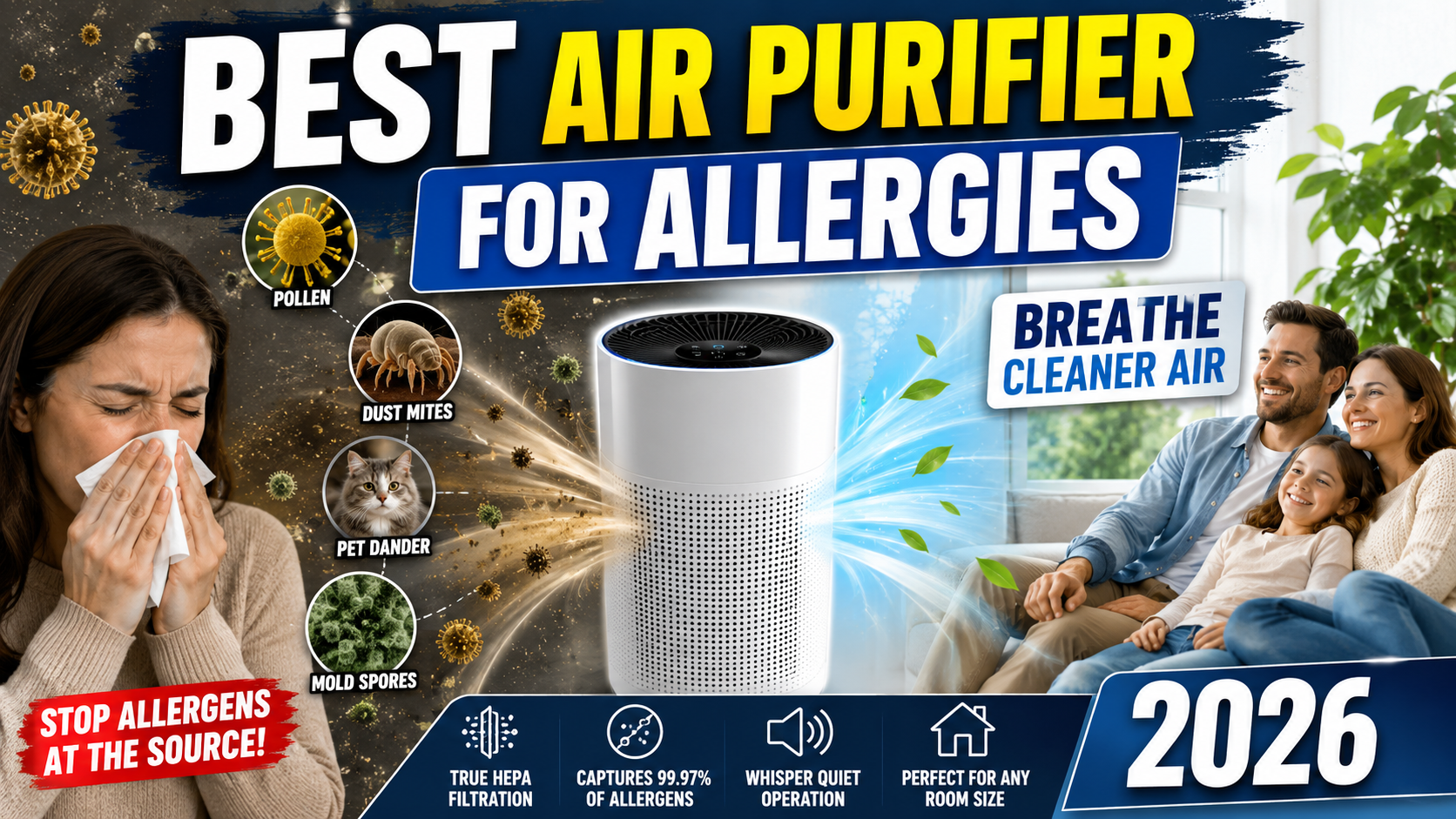
Discover the best air purifier for allergies in 2026. Learn how they work, what features matter, and how to choose the right model for your home.
Air Purifier for Allergies: A Complete Guide to Cleaner Air and Better Health
Imagine waking up every morning with a stuffy nose, itchy eyes, and constant sneezing—even when you’re inside your own home. For millions of Americans, allergies don’t stop at the front door. In fact, indoor air can sometimes contain more allergy triggers than the air outside. Dust mites hiding in carpets, pet dander floating through rooms, mold spores growing in damp corners, and pollen brought indoors on clothing can create an environment where allergy symptoms never seem to disappear.
If that sounds familiar, you’re not alone. Many people spend years trying medications, cleaning routines, and home remedies without realizing that the air itself may be part of the problem. That’s why an air purifier for allergies has become one of the most popular solutions for creating a healthier indoor environment.
What makes this topic especially important in 2026 is that modern homes are built to be more energy efficient than ever before. While that’s great for utility bills, it also means indoor air can become trapped, allowing allergens to circulate continuously. The result is an environment where sensitive individuals may experience symptoms every day.
The good news is that today’s technology offers powerful solutions. A high-quality air purifier for allergies can remove microscopic particles from the air before they reach your lungs, helping many allergy sufferers breathe more comfortably. But not all air purifiers are created equal. Some models excel at removing pollen, while others are better suited for pet owners or households dealing with dust problems.
In this guide, you’ll learn exactly how an air purifier for allergies works, which features matter most, and how to choose the best option for your home and budget. By the end, you’ll have a clear understanding of what separates an effective allergy-focused air purifier from a model that simply looks impressive on the box.
What Is an Air Purifier for Allergies?
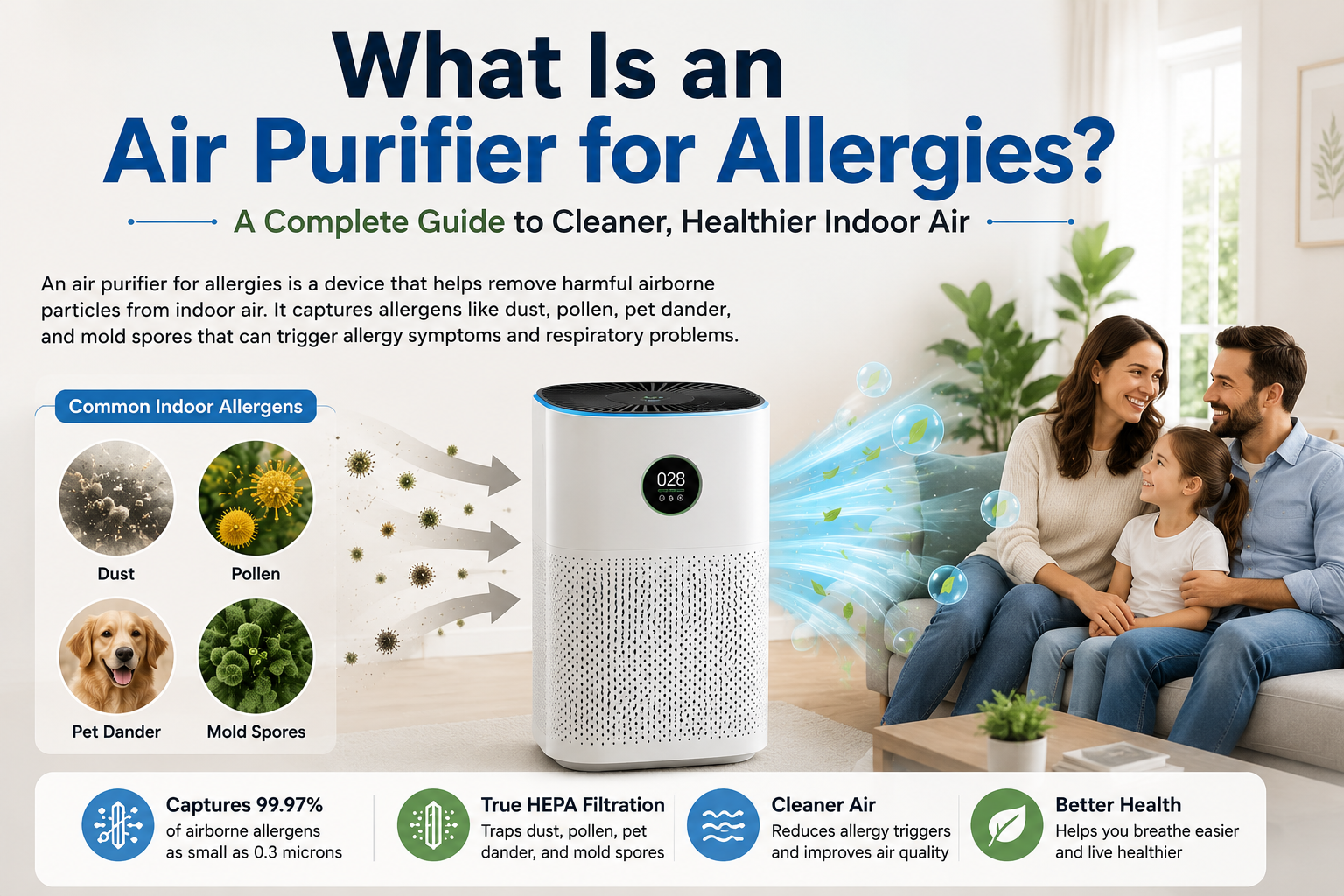
An air purifier for allergies is a device designed to capture and remove airborne allergens before they can trigger symptoms. These devices continuously pull air through specialized filters and then release cleaner air back into the room.
Most allergy-causing particles are invisible to the naked eye. They include:
- Pollen
- Dust mites
- Pet dander
- Mold spores
- Smoke particles
- Airborne bacteria
- Fine particulate matter
When these particles remain suspended in indoor air, they can easily enter your respiratory system. An effective air purifier for allergies helps reduce this exposure by trapping contaminants before they circulate throughout the home.
Why Indoor Air Quality Matters More Than Ever
Many people assume outdoor pollution is the primary concern, but studies consistently show that indoor air can be surprisingly polluted.
Common indoor allergy triggers include:
| Allergen | Common Source |
|---|---|
| Dust Mites | Bedding, carpets, upholstery |
| Pet Dander | Dogs, cats, birds |
| Pollen | Open windows, clothing |
| Mold Spores | Bathrooms, basements |
| Smoke | Cooking, fireplaces, tobacco |
Because most Americans spend a significant portion of their day indoors, exposure to these allergens can become continuous. This is one reason why a properly selected air purifier for allergies can have such a noticeable impact on daily comfort.
How an Air Purifier for Allergies Cleans the Air and Helps Reduce Everyday Allergy Triggers
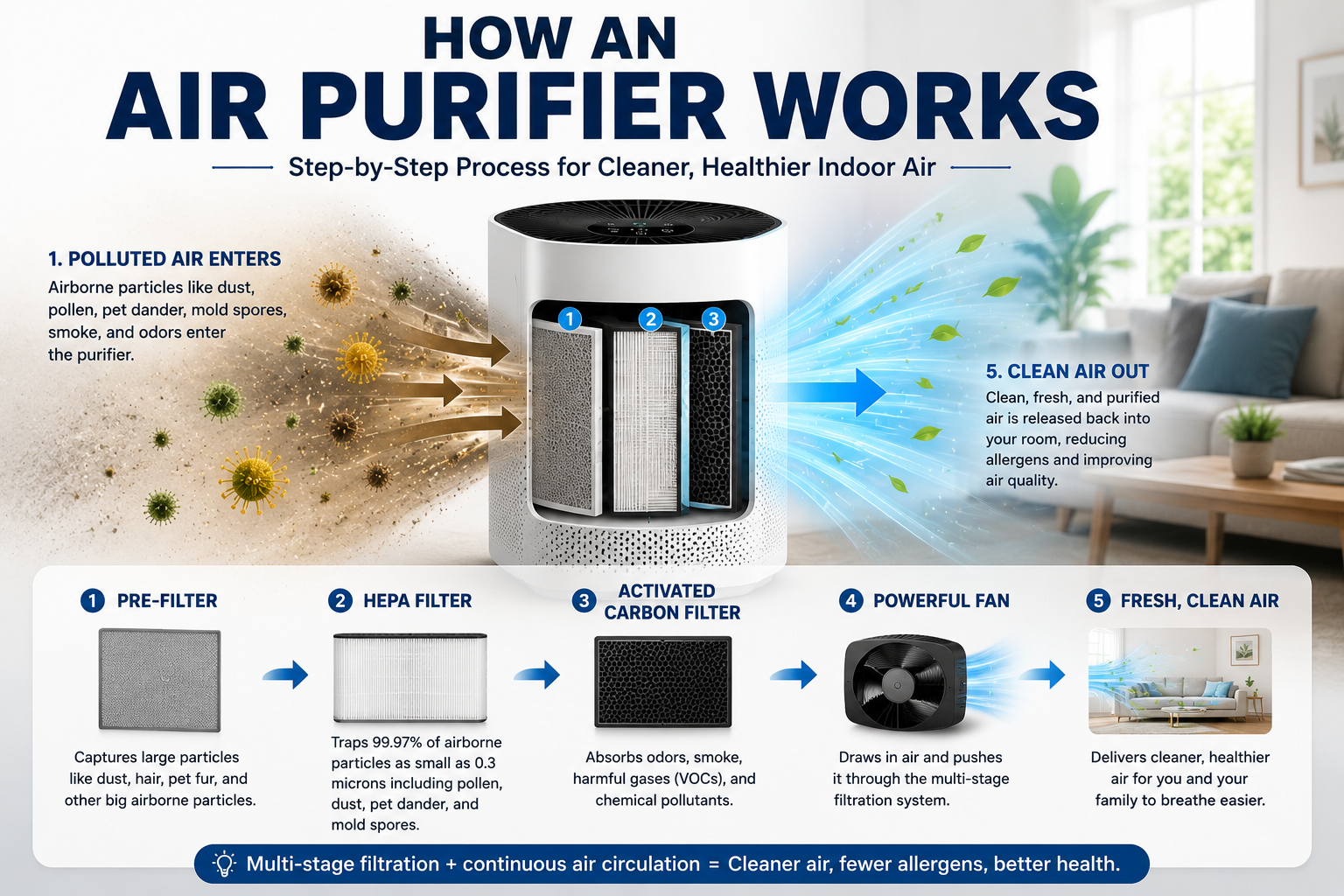
The basic process is surprisingly simple, but the technology behind a quality air purifier can make a significant difference in your indoor air quality. Understanding how it works will help you choose the right model and set realistic expectations for allergy relief.
Step 1: The Air Purifier Pulls Allergy-Causing Particles From the Surrounding Air
The process begins when the purifier draws air from the room using a built-in fan. This air may contain dust, pollen, pet dander, mold spores, and other microscopic particles that can trigger allergy symptoms.
Step 2: Multiple Filter Layers Capture Dust, Pollen, Pet Dander, and Other Allergens
Once inside the unit, the air moves through a series of filters. Depending on the model, these filters may include a pre-filter, activated carbon filter, and a True HEPA filter. Together, they trap airborne contaminants before they have a chance to circulate throughout your home.
Step 3: Clean, Filtered Air Is Released Back Into Your Living Space
After passing through the filtration system, the cleaned air is pushed back into the room. Because many of the allergy-triggering particles have been removed, the air becomes cleaner and more comfortable to breathe over time.
Why Advanced Multi-Stage Filtration Makes a Big Difference for Allergy Sufferers
The most effective air purifier for allergies models use several filtration stages instead of relying on a single filter. This layered approach helps capture a wider range of pollutants, resulting in better indoor air quality and more consistent allergy relief.
The Importance of HEPA Filters
When shopping for an air purifier for allergies, you’ll repeatedly encounter the term HEPA.
HEPA stands for High-Efficiency Particulate Air.
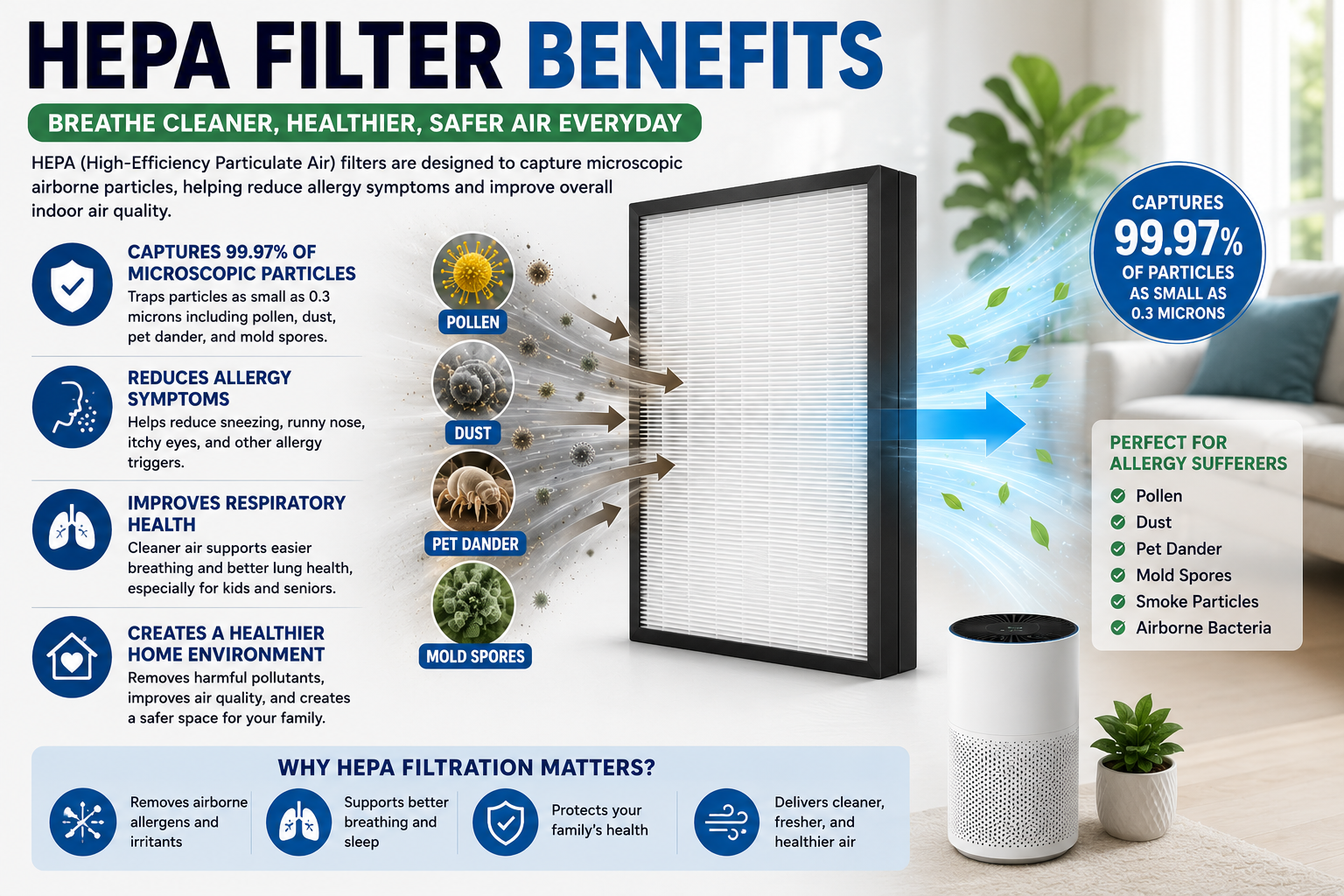
A true HEPA filter can capture up to 99.97% of particles as small as 0.3 microns.
This includes:
- Pollen
- Dust
- Pet dander
- Mold spores
For allergy sufferers, HEPA filtration is often considered the gold standard.
Benefits of HEPA Filtration
Exceptional Particle Removal
HEPA filters are specifically engineered to trap microscopic allergens that ordinary filters may miss.
Improved Indoor Comfort
Many users report fewer allergy symptoms after consistently using a HEPA-equipped air purifier for allergies.
Long-Term Air Quality Improvement
Regular operation can significantly reduce airborne allergen levels over time.
Key Features to Look for When Buying an Air Purifier for Allergies
Not every model offers the same performance. Understanding these features can help you make a smarter investment.
Room Coverage
Choose a unit that matches your room size.
A purifier designed for a small bedroom may struggle in a large living room.
Always check:
- Recommended square footage
- CADR rating
- Air changes per hour
CADR Rating
CADR stands for Clean Air Delivery Rate.
Higher CADR numbers generally indicate faster removal of airborne particles.
Look for strong ratings in:
- Dust
- Pollen
- Smoke
These categories directly impact allergy relief.
Noise Levels
Many people run an air purifier for allergies while sleeping.
Models with quiet modes are ideal for bedrooms and nurseries.
Smart Features
Modern purifiers may include:
- Air quality sensors
- Mobile apps
- Automatic fan adjustments
- Filter replacement alerts
These features improve convenience without requiring constant adjustments.
Air Purifier for Allergies vs Humidifier
This is one of the most common questions among allergy sufferers.
Air Purifier
- Removes allergens from the air
- Uses filters
- Improves air cleanliness
Humidifier
- Adds moisture to dry air
- Does not remove allergens
- Helps with dryness-related discomfort
For allergy relief, an air purifier for allergies addresses the root cause more directly because it targets airborne particles rather than humidity levels.
Signs You May Need an Air Purifier for Allergies
You may benefit from an air purifier for allergies if you experience:
- Frequent sneezing indoors
- Persistent nasal congestion
- Itchy eyes
- Pet-related allergy symptoms
- Seasonal pollen sensitivity
- Dust-triggered reactions
- Worsening symptoms at night
Many people notice improvements within a few weeks of consistent use, particularly when the purifier is placed in the room where they spend the most time.
Top Benefits of Using an Air Purifier for Allergies in Your Home Every Day
For many people, buying an air purifier for allergies starts as an attempt to reduce sneezing, itchy eyes, or a constantly runny nose. However, after using one consistently, many homeowners discover that the benefits extend far beyond basic allergy relief. Cleaner indoor air can positively impact sleep quality, daily comfort, home cleanliness, and overall well-being. Whether you struggle with seasonal allergies, pet dander, or year-round dust sensitivity, a quality air purifier can make your living space noticeably more comfortable.
Enjoy Better Sleep With Cleaner, Fresher Air Throughout the Night
If allergy symptoms seem worse when you’re trying to sleep, you’re not imagining it. Dust, pollen, and pet dander can continue circulating through your bedroom while you rest, often leading to congestion, coughing, sneezing, or interrupted sleep.
A high-quality air purifier for allergies continuously filters the air while you sleep, helping reduce airborne particles that may trigger symptoms. Many users report waking up with less nasal congestion, fewer allergy flare-ups, and a greater feeling of refreshment in the morning. For allergy sufferers, improved air quality can contribute to a more restful and uninterrupted night’s sleep.
Experience Greater Comfort and Fewer Allergy Symptoms During Everyday Activities
Living with allergies can be exhausting. Constant sneezing, itchy eyes, sinus pressure, and throat irritation can affect productivity, concentration, and overall quality of life.
Using an air purifier for allergies helps reduce the number of airborne irritants in your home, creating a more comfortable environment for working, relaxing, watching TV, or spending time with family. While an air purifier is not a cure for allergies, many people notice that everyday activities become more enjoyable when they’re not constantly battling allergy symptoms.
Reduce Pet Dander Without Giving Up Your Beloved Pets
Pets are family members, but they can also be one of the most common sources of indoor allergens. Even homes that are cleaned regularly may contain pet dander floating in the air and settling on furniture, bedding, and carpets.
An effective air purifier for allergies can help capture pet dander particles before they spread throughout the home. This is especially valuable for households with dogs or cats where family members experience mild to moderate pet allergies. While no purifier can completely eliminate pet allergens, it can significantly reduce airborne exposure and make living with pets much more manageable.
Create a Cleaner Home Environment With Less Dust in the Air
One unexpected benefit many homeowners notice is a reduction in visible dust around the house. Airborne particles eventually settle on furniture, shelves, electronics, and floors. By trapping many of these particles before they land, an air purifier for allergies can help keep your home feeling cleaner between regular cleaning sessions.
Although you will still need to dust and vacuum regularly, many users find that surfaces stay cleaner for longer periods when an air purifier is running consistently.
Help Protect Children, Seniors, and Individuals With Respiratory Sensitivities
Certain groups are often more sensitive to poor indoor air quality than others. Young children, older adults, and people with respiratory conditions may react more strongly to airborne irritants.
Using an air purifier for allergies can help create a healthier indoor environment by reducing common pollutants that may trigger discomfort. Cleaner air may be particularly beneficial in bedrooms, nurseries, home offices, and living areas where family members spend most of their time.
Minimize Exposure to Seasonal Allergens That Enter Your Home
Even if you keep your windows closed during allergy season, pollen can still find its way indoors through clothing, shoes, pets, and open doors. Once inside, these microscopic particles can remain suspended in the air for hours.
A reliable air purifier for allergies helps capture airborne pollen before it has a chance to spread throughout your living space. This can be especially helpful during spring and fall when seasonal allergies are often at their worst.
Improve Overall Indoor Air Quality for Long-Term Comfort
Perhaps the biggest benefit is the overall improvement in indoor air quality. Most people spend a significant portion of their day inside their homes, yet many rarely think about the air they breathe. By continuously removing dust, pollen, pet dander, and other airborne contaminants, an air purifier for allergies helps create a cleaner, fresher environment that supports long-term comfort and wellness.
Why an Air Purifier for Allergies Is Worth Considering
✔ Helps reduce airborne allergens such as dust, pollen, and pet dander
✔ Supports better sleep by improving nighttime air quality
✔ Makes everyday living more comfortable for allergy sufferers
✔ Helps reduce pet-related allergy triggers
✔ Contributes to a cleaner indoor environment
✔ Supports sensitive individuals, including children and older adults
✔ Helps manage seasonal allergy symptoms indoors
✔ Improves overall indoor air quality throughout the home.
When used consistently alongside regular cleaning and proper ventilation, an air purifier for allergies can become one of the most effective tools for creating a healthier and more comfortable home environment.
Choosing the Best Air Purifier for Allergies Based on Your Specific Needs
Not every allergy sufferer deals with the same triggers. Some people struggle with seasonal pollen, while others battle pet dander, dust mites, or mold spores throughout the year. That’s why there isn’t one perfect air purifier for allergies for everyone. The right choice depends on your home environment, lifestyle, and the allergens causing your symptoms.
Before purchasing an air purifier, it’s important to identify your primary allergy triggers. Doing so will help you invest in a model that delivers the greatest benefit for your situation.
Best Air Purifier for Dust Allergies and Everyday Household Dust
Dust is one of the most common indoor allergens found in American homes. It collects on furniture, carpets, bedding, curtains, and upholstery. Even regular cleaning cannot completely eliminate airborne dust particles because they are constantly being stirred up by daily activities.
A high-quality air purifier for allergies equipped with a True HEPA filter can help capture fine dust particles before they settle back into your living space. For people who wake up with congestion or frequently sneeze indoors, reducing airborne dust can make a noticeable difference in overall comfort.
Features That Matter Most for Dust Allergy Relief
- True HEPA filtration
- High Clean Air Delivery Rate (CADR) for dust
- Large room coverage
- Continuous operation capability
- Low maintenance requirements
Best Air Purifier for Pet Allergies Without Giving Up Your Pets
For many families, pets are beloved members of the household. Unfortunately, pet dander is one of the most common indoor allergy triggers. Tiny skin particles shed by dogs, cats, and other animals can remain suspended in the air for extended periods and spread throughout the home.
An effective air purifier for allergies can significantly reduce airborne pet dander, helping allergy sufferers enjoy a more comfortable living environment without having to make difficult decisions about their pets.
Many allergy-sensitive pet owners find that combining regular cleaning with a quality air purifier creates a noticeable improvement in indoor air quality.
Important Features for Pet Owners
- True HEPA filter for capturing dander
- Activated carbon filter for pet odors
- Strong airflow and circulation
- Quiet operation for bedrooms
- Easy-to-replace filters
Best Air Purifier for Seasonal Pollen Allergies During Spring and Fall
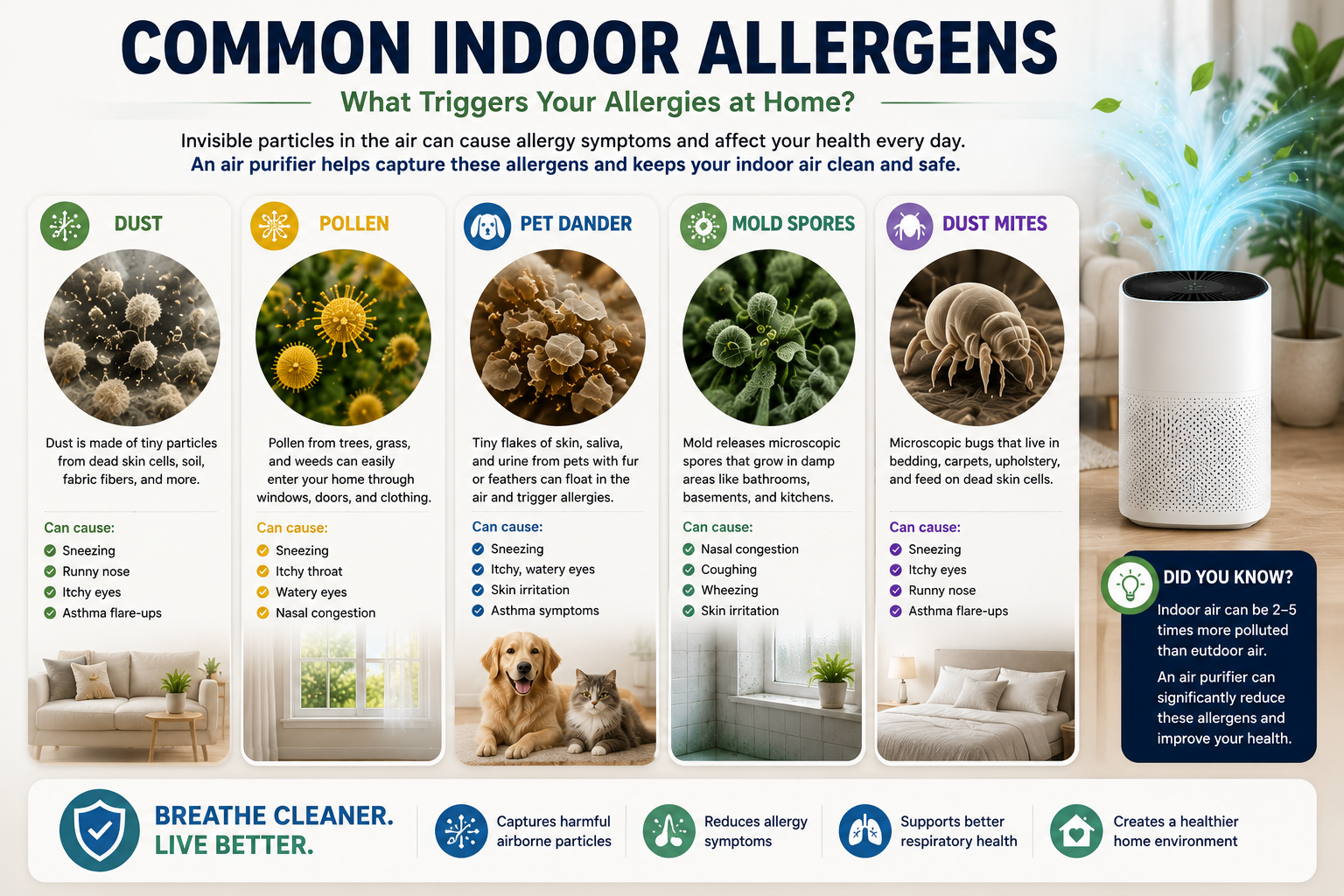
Seasonal allergies can make certain times of the year particularly challenging. Pollen from trees, grasses, and weeds often enters homes through open doors, windows, clothing, and even pets returning from outside.
Once pollen gets indoors, it can continue triggering symptoms long after you’ve come inside. A properly sized air purifier for allergies helps remove airborne pollen particles, creating a cleaner and more comfortable indoor environment during allergy season.
Many people notice that their symptoms become more manageable when they use an air purifier consistently throughout peak pollen periods.
Helpful Features for Managing Seasonal Allergies
- High-efficiency HEPA filtration
- Air quality monitoring sensors
- Automatic fan speed adjustment
- Fast air circulation
- Large coverage area
Premium Features That Can Make an Air Purifier More Effective and Convenient
While basic filtration is essential, modern air purifiers often include advanced features that improve performance, convenience, and overall user experience.
Real-Time Air Quality Monitoring for Smarter Performance
Many newer models include built-in sensors that continuously monitor indoor air quality. These sensors detect airborne particles and automatically adjust the purifier’s performance when pollution levels increase.
This feature allows your air purifier for allergies to work smarter rather than harder, maintaining cleaner air without requiring constant manual adjustments.
Automatic Mode for Hassle-Free Operation
Auto mode is one of the most useful features available today. Instead of constantly changing fan speeds yourself, the purifier automatically responds to changing air conditions.
When indoor air quality declines, the unit increases filtration power. Once conditions improve, it returns to a quieter and more energy-efficient setting.
Filter Replacement Indicators That Prevent Performance Loss
Even the best air purifier for allergies becomes less effective if filters aren’t replaced on time. Modern units often include filter replacement alerts that notify users when maintenance is needed.
This simple feature helps ensure the purifier continues operating at peak efficiency year-round.
Smart App Connectivity for Complete Control
Many premium air purifiers now offer smartphone integration. Through a mobile app, users can:
- Monitor indoor air quality
- Adjust fan settings remotely
- Create schedules
- Receive maintenance notifications
- Track air quality history
For busy homeowners, these features provide added convenience and peace of mind.
Where Should You Place an Air Purifier for the Best Allergy Relief?
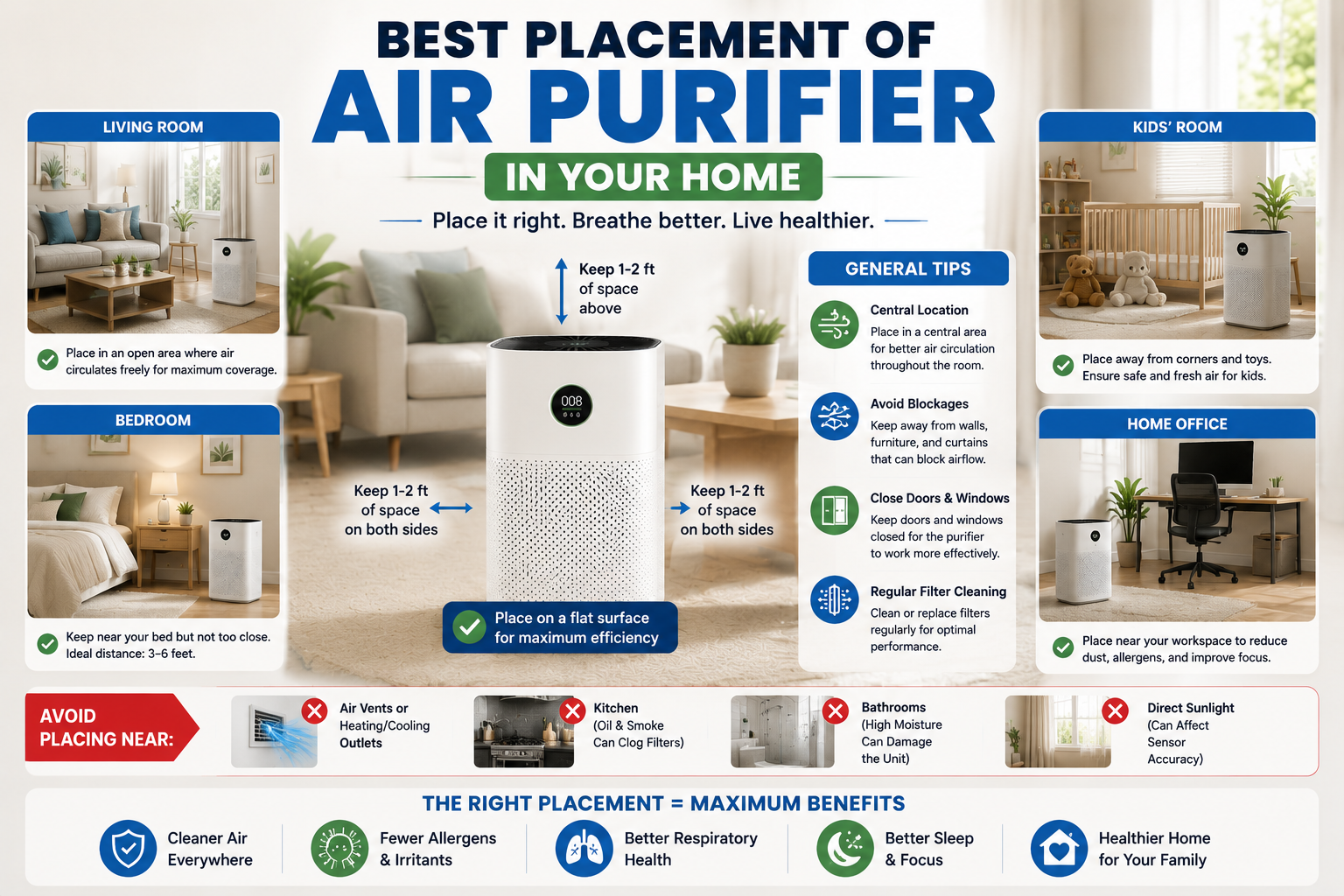
The location of your air purifier for allergies can have a significant impact on its effectiveness. Even a high-end unit may struggle if airflow is restricted or the purifier is placed in an unsuitable location.
Ideal Locations for Maximum Performance
The best locations often include:
- Bedrooms
- Living rooms
- Home offices
- Children’s rooms
- Areas where pets spend most of their time
Because people spend several uninterrupted hours sleeping each night, many experts recommend placing an air purifier in the bedroom first.
Common Placement Mistakes to Avoid
Avoid placing your purifier:
- Behind furniture
- Inside closets
- In tight corners
- Directly against walls
- Near large objects that block airflow
Proper airflow allows the unit to circulate and clean air more efficiently throughout the room.
How Long Does It Take Before an Air Purifier Starts Helping With Allergies?
One of the first questions many buyers ask is how quickly they can expect results.
The answer varies depending on several factors, including:
- Room size
- Air purifier quality
- Severity of allergens
- Daily usage habits
- Existing indoor air quality
Some people notice fresher air within a few hours, while others may require several days or weeks before experiencing noticeable allergy relief.
For the best results, run your air purifier for allergies continuously rather than only during allergy flare-ups. Consistent filtration helps maintain cleaner indoor air and prevents allergens from building up over time.
Simple Maintenance Tips to Keep Your Air Purifier Performing Like New
An air purifier can only perform well if it is properly maintained. Fortunately, routine maintenance is simple and usually requires minimal effort.
Replace Filters According to Manufacturer Recommendations
Filters gradually fill with captured particles and eventually become less effective. Following the manufacturer’s replacement schedule helps maintain optimal performance.
Clean Air Intake and Exhaust Areas Regularly
Dust can accumulate around vents and air openings. A quick cleaning every few weeks helps maintain strong airflow and efficient filtration.
Keep the Area Around the Unit Clear
Allow adequate space around your air purifier for allergies so air can move freely through the system.
Monitor Performance and Air Quality Indicators
If your purifier includes air quality sensors or maintenance alerts, pay attention to them. These features help ensure the unit continues operating efficiently and effectively.
By choosing the right model, placing it correctly, and maintaining it properly, an air purifier for allergies can become one of the most valuable tools for improving indoor air quality and reducing exposure to everyday allergens.
Complete Buying Guide: How to Choose the Best Air Purifier for Allergies Without Wasting Your Money
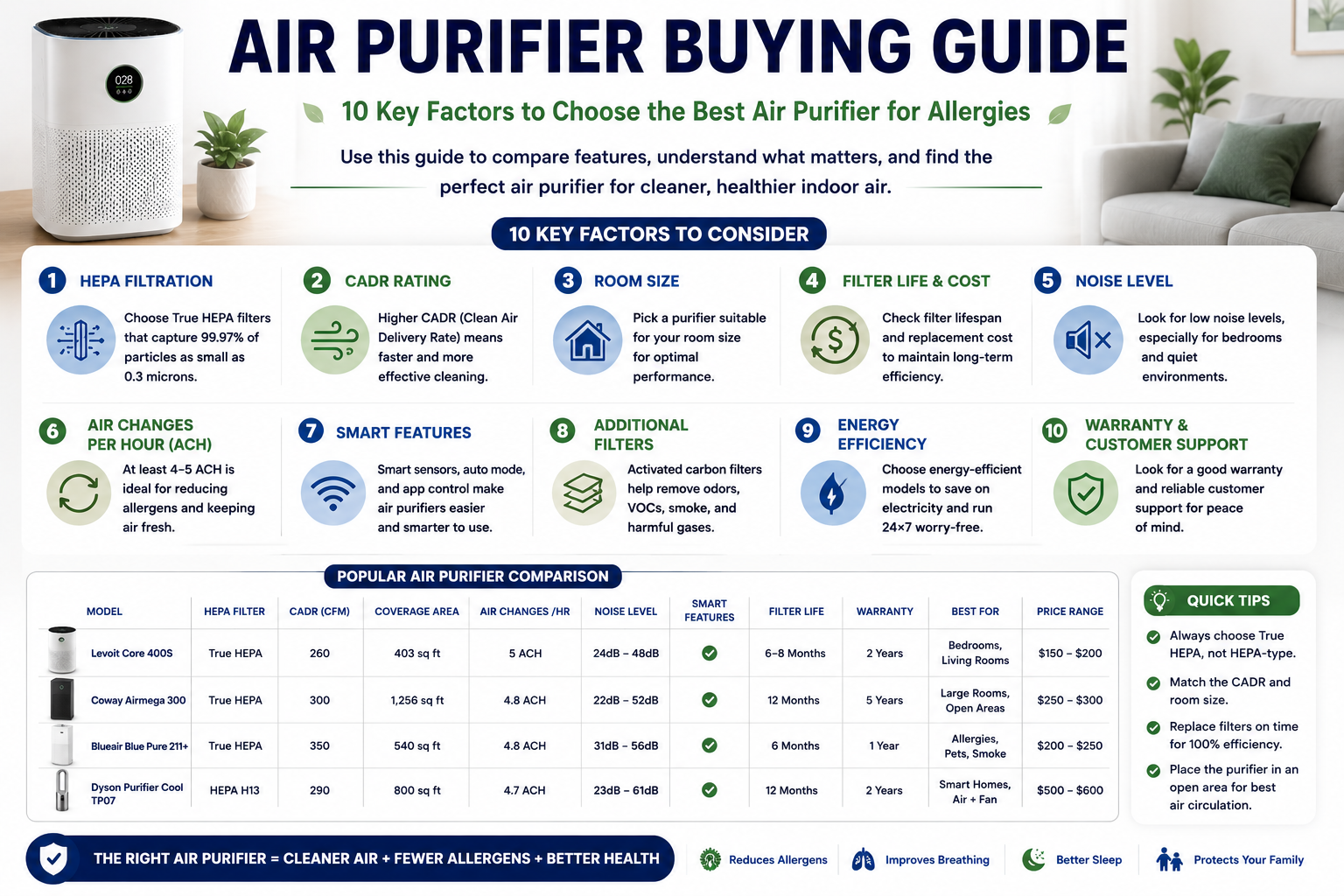
Shopping for an air purifier for allergies can quickly become confusing. A simple search online reveals hundreds of models, each claiming to be the best solution for cleaner air and allergy relief. Some promise medical-grade filtration, while others advertise advanced smart features and impressive performance numbers. For the average buyer, separating genuine value from marketing hype isn’t always easy.
The reality is that the effectiveness of an air purifier depends on a few critical factors. You don’t necessarily need the most expensive model on the market, but you do need one that is designed to handle the allergens present in your home. Understanding what truly matters before making a purchase can save you money and help you choose a purifier that delivers noticeable results.
1. Always Prioritize a True HEPA Filter for Maximum Allergy Protection
If there is one feature you should never compromise on, it’s a True HEPA filter.
HEPA (High-Efficiency Particulate Air) filters are widely considered the gold standard for allergy relief because they are designed to capture up to 99.97% of airborne particles as small as 0.3 microns. These microscopic particles include many of the allergens responsible for common allergy symptoms.
A quality HEPA-equipped air purifier for allergies can help remove:
- Pollen from trees, grasses, and weeds
- Household dust particles
- Pet dander from dogs and cats
- Mold spores
- Fine airborne pollutants
Without True HEPA filtration, many air purifiers simply won’t provide the level of allergen removal most allergy sufferers need. While other filtration technologies can be useful, HEPA should always be your foundation.
2. Make Sure the Air Purifier Matches the Size of Your Room
One of the most common mistakes people make is purchasing an air purifier that is too small for the space they want to clean.
Even the best air purifier for allergies will struggle if it’s trying to filter air in a room much larger than its recommended coverage area. A purifier designed for a small bedroom may not effectively clean the air in a large living room or open-concept space.
Before buying, always check:
- Recommended room size
- CADR (Clean Air Delivery Rate)
- Air Changes Per Hour (ACH)
A properly sized unit can clean the air more efficiently, remove allergens faster, and provide more consistent results throughout the day.
3. Don’t Ignore Long-Term Filter Replacement Costs
Many buyers focus entirely on the initial purchase price and forget that filters need regular replacement.
A budget-friendly purifier may seem like a great deal at first, but expensive replacement filters can significantly increase ownership costs over time.
Before choosing an air purifier for allergies, take a few minutes to research:
- How often filters need replacement
- Average filter costs
- Availability of replacement filters
- Warranty coverage
Sometimes a slightly more expensive purifier with affordable filters turns out to be the better long-term investment.
4. Choose a Model That Runs Quietly, Especially for Bedrooms
Since many people use their air purifiers while sleeping, noise level can have a major impact on overall satisfaction.
A loud purifier may clean the air effectively, but if it disrupts your sleep, you probably won’t want to keep it running all night.
Look for features such as:
- Sleep mode
- Quiet fan settings
- Low decibel ratings
- Automatic nighttime operation
A quiet air purifier for allergies can continuously improve indoor air quality while remaining virtually unnoticed, making it ideal for bedrooms and nurseries.
5. Focus on Proven Performance Instead of Marketing Buzzwords
Air purifier manufacturers often use impressive-sounding terms to attract buyers, but not every advertised feature actually improves allergy relief.
Rather than focusing on flashy marketing claims, pay attention to measurable performance indicators.
The most important factors include:
- True HEPA filtration
- CADR ratings
- Room coverage
- Filter quality
- Independent customer reviews
A reliable air purifier for allergies doesn’t need exaggerated promises. Strong filtration performance and positive real-world results matter far more than fancy packaging or advertising slogans.
Quick Comparison Table: The Most Important Features to Look for in an Air Purifier for Allergies
| Feature | Why It Matters |
|---|---|
| True HEPA Filter | Captures microscopic allergens such as pollen, dust, and pet dander |
| High CADR Rating | Cleans the air faster and more efficiently |
| Proper Room Coverage | Ensures the purifier can effectively handle your space |
| Quiet Operation | Ideal for bedrooms, nurseries, and home offices |
| Activated Carbon Filter | Helps reduce odors, smoke, and VOCs |
| Auto Mode | Automatically adjusts performance based on air quality |
| Air Quality Sensors | Provides real-time indoor air monitoring |
| Affordable Replacement Filters | Reduces long-term maintenance costs |
Final Verdict Is an Air Purifier for Allergies Worth the Investment?
If you’re tired of waking up congested, constantly sneezing indoors, or dealing with allergy symptoms that seem impossible to escape, investing in a quality air purifier for allergies may be one of the smartest decisions you can make for your home.
While no air purifier can completely eliminate every allergen, the right unit can dramatically reduce airborne particles that contribute to daily discomfort. Cleaner indoor air often translates into better sleep, improved comfort, fewer allergy flare-ups, and a healthier living environment overall.
The key is choosing a purifier that combines True HEPA filtration, appropriate room coverage, reliable performance, and reasonable maintenance costs. When paired with regular cleaning habits and proper home ventilation, a well-chosen air purifier for allergies can play a major role in helping you breathe easier and enjoy your home more comfortably every day.
Frequently Asked Questions About Air Purifiers for Allergies
Do Air Purifiers Really Help With Allergies?
Yes, a high-quality air purifier for allergies can make a noticeable difference for many people. By continuously removing airborne allergens such as dust, pollen, pet dander, and mold spores, an air purifier helps reduce the particles that often trigger allergy symptoms. While it won’t cure allergies, it can create a cleaner indoor environment that supports better comfort and easier breathing.
How Long Should I Run an Air Purifier Each Day?
For the best results, experts generally recommend running your air purifier for allergies continuously. Allergens are constantly entering and circulating through your home, so ongoing filtration helps maintain cleaner air around the clock.
Can an Air Purifier Reduce Pet Allergy Symptoms?
Yes. Pet dander is one of the most common indoor allergens, and a HEPA-equipped air purifier for allergies can help capture these airborne particles before they spread throughout your home. Many pet owners report noticeable improvements after adding an air purifier to frequently used living spaces.
Is a HEPA Filter Really Necessary?
If your goal is allergy relief, a True HEPA filter is highly recommended. HEPA technology remains one of the most effective methods for capturing microscopic airborne allergens and is considered essential in most allergy-focused air purifiers.
Where Is the Best Place to Put an Air Purifier?
The bedroom is often the most effective location because that’s where people spend several uninterrupted hours each day. However, living rooms, home offices, and areas where pets spend time can also benefit greatly from a dedicated air purifier for allergies.
Can Air Purifiers Eliminate Dust Completely?
No. Dust will continue entering your home through daily activities, open doors, clothing, and other sources. However, a quality air purifier for allergies can significantly reduce airborne dust levels and help keep indoor air cleaner over time.
How Often Should Filters Be Replaced?
Filter replacement schedules vary by manufacturer and usage conditions. Most HEPA filters need replacement every 6 to 12 months, although homes with pets or high allergen levels may require more frequent changes.