

Discover the best free AI finance tools for students in 2026. Budget smarter, save money, track expenses, and build better financial habits.
Free AI Finance Tools for Students: The Complete 2026 Guide
Introduction
College can be one of the most exciting periods of life. It is often the first time students experience freedom, independence, and responsibility all at once.
But there is one challenge almost every student faces.
Money.
Between tuition fees, rent, groceries, transportation, subscriptions, textbooks, and unexpected expenses, it often feels like money disappears faster than it arrives.
Many students start every semester with good intentions. They promise themselves they will stick to a budget, avoid unnecessary spending, and save more.
A few weeks later, reality hits.
Food deliveries, streaming subscriptions, coffee runs, and impulse purchases slowly eat away at their budget.
This is where free AI finance tools for students are changing the game.
Instead of manually tracking every expense in a spreadsheet, students can now use artificial intelligence to monitor spending habits, identify wasteful purchases, create smarter budgets, and build healthier financial routines.
The best part?
Many of these tools are completely free.
In this guide, you’ll discover the best free AI finance tools for students, how they work, their pros and cons, and how they can help you gain control of your finances without spending a dollar.
What Are Free AI Finance Tools for Students?
These tools can:
- Analyze spending patterns
- Categorize expenses automatically
- Detect recurring subscriptions
- Create savings goals
- Suggest budgeting improvements
- Send spending alerts
- Improve financial awareness
Think of them as a personal finance assistant that works 24/7.
Why Students Need AI Finance Tools More Than Ever
The cost of education continues to rise.
According to multiple education and finance reports, students today face higher living costs than previous generations.
At the same time:
- Credit card debt is increasing
- Student loan balances remain significant
- Housing costs continue rising
- Inflation affects everyday purchases
Managing finances manually can be difficult when students are already balancing:
- Classes
- Exams
- Part-time jobs
- Internships
- Social activities
Using free AI finance tools for students can simplify this process dramatically.
Instead of spending hours organizing expenses, AI performs much of the work automatically.
Benefits of Using Free AI Finance Tools for Students
1. Better Spending Awareness
Many students underestimate how much they spend.
A $6 coffee here.
A $15 meal delivery there.
Small purchases add up quickly.
AI tools provide a clear picture of where money is going.
2. Smarter Budgeting
Traditional budgets often fail because they are unrealistic.
AI tools learn spending patterns and recommend practical budgets based on actual behavior.
3. Reduced Financial Stress
Money stress affects academic performance.
Knowing exactly where your finances stand can provide peace of mind.
4. Easier Savings
Saving money feels easier when progress is visible.
Many AI tools offer:
- Savings goals
- Progress tracking
- Spending forecasts
These features help students stay motivated.
5. Improved Financial Habits
The habits developed during college often continue into adulthood.
Learning financial discipline early can have long-term benefits.
Quick Comparison Table
| Tool | Best For | Free Version | AI Features |
|---|---|---|---|
| ChatGPT | Financial education | Yes | Excellent |
| Cleo | Daily budgeting | Yes | Strong |
| Rocket Money | Subscription tracking | Yes | Strong |
| Goodbudget | Envelope budgeting | Yes | Basic |
| NerdWallet Tools | Financial planning | Yes | Moderate |
| Monarch Money | Budget analysis | Limited | Advanced |
| PocketGuard | Expense tracking | Yes | Good |
Best Free AI Finance Tools for Students
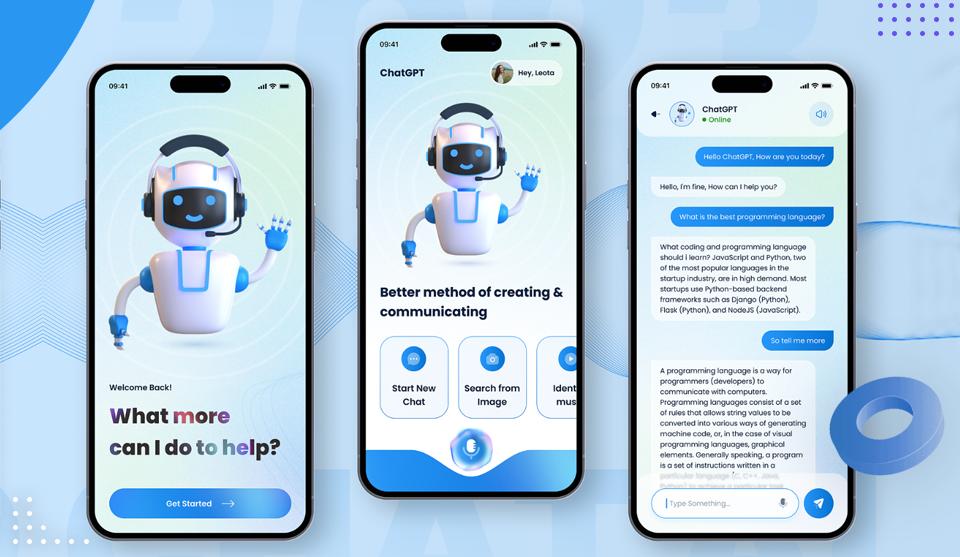
1. ChatGPT
Many students don’t realize that ChatGPT can function as a powerful financial assistant.
Students can ask questions like:
- How do I budget $500 per month?
- How much should I save each week?
- How can I reduce spending?
- What’s a good emergency fund goal?
Pros
- Free access available
- Instant answers
- Personalized budgeting suggestions
- Financial education support
Cons
- Doesn’t connect directly to bank accounts
- Requires user input
Best For
Students who want financial guidance and learning support.
2. Cleo
Cleo combines budgeting with a conversational AI experience.
Instead of looking at boring charts, users interact with an AI assistant that provides spending insights and money management tips.
Pros
- Beginner-friendly
- Fun interface
- Spending alerts
- Budget monitoring
Cons
- Some advanced features are paid
Best For
Students who struggle to stay engaged with budgeting apps.
3. Rocket Money
Rocket Money helps users identify subscriptions and recurring expenses.
Many students pay for services they rarely use.
Rocket Money makes those hidden costs easier to spot.
Pros
- Subscription tracking
- Expense monitoring
- Budget planning
Cons
- Some premium features require payment
Best For
Students who subscribe to multiple streaming or software services.
4. Goodbudget
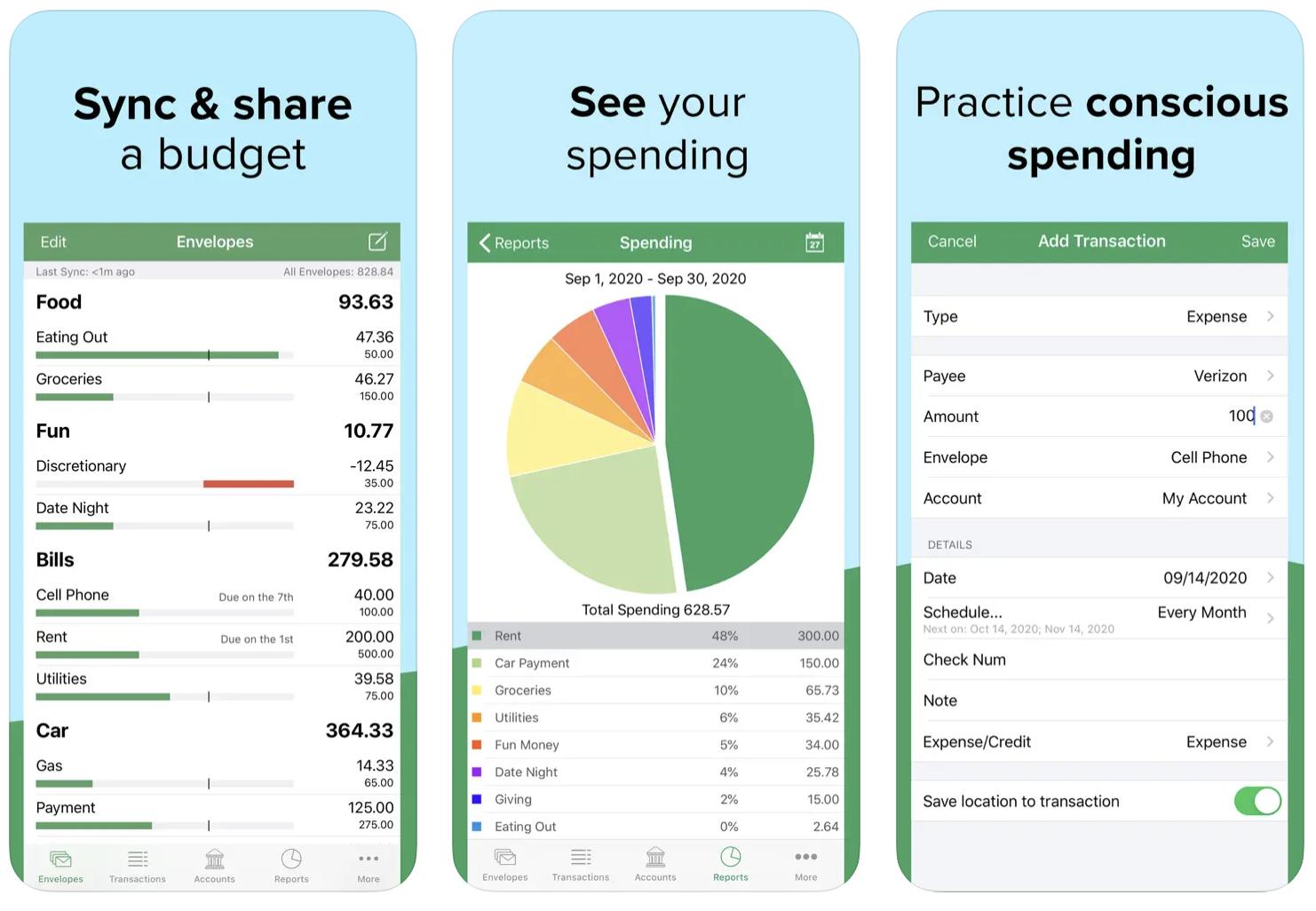
Goodbudget uses the envelope budgeting method.
Users allocate money into virtual categories before spending.
Pros
- Easy budgeting system
- Simple interface
- Great learning tool
Cons
- Manual entry required
Best For
Students learning budgeting fundamentals.
5. NerdWallet Budget Tools
NerdWallet offers educational resources combined with budgeting assistance.
It helps students understand:
- Credit scores
- Saving strategies
- Debt management
- Budget planning
Pros
- Excellent educational content
- Free tools
Cons
- Less automation than some AI competitors
Best For
Students building financial knowledge.
More Free AI Finance Tools for Students Worth Using
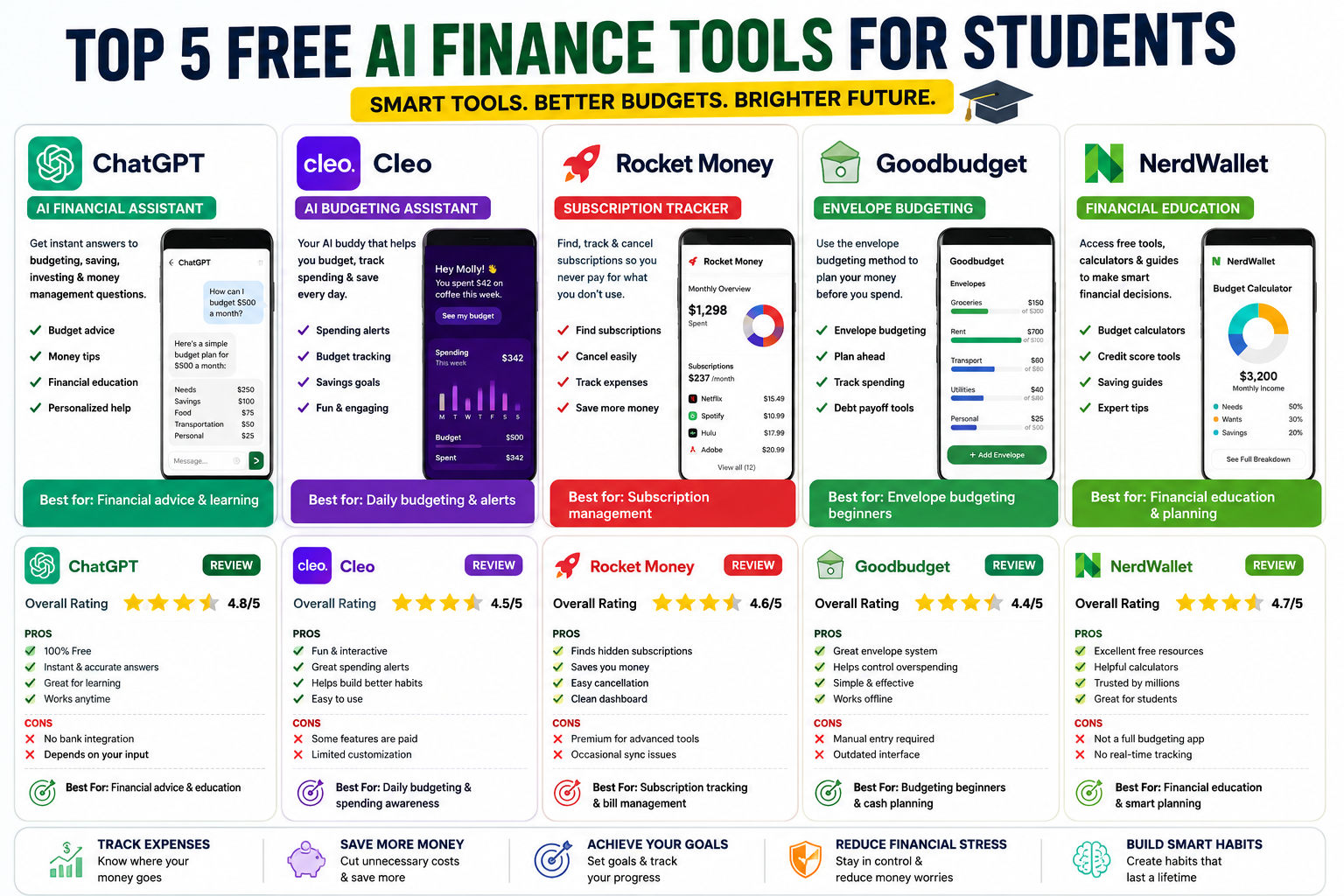
The first five tools are excellent starting points, but they’re not the only options. Depending on your financial goals, some tools may be a better fit than others.
6. PocketGuard
PocketGuard focuses on one simple question:
“How much money can I safely spend today?”
Many students know their account balance but don’t know how much of it is actually available after bills and necessities.
PocketGuard solves this problem by showing what’s left after accounting for essential expenses.
Pros
- Easy-to-understand dashboard
- Spending insights
- Budget tracking
- Expense categorization
Cons
- Advanced features may require upgrading
Best For
Students who frequently overspend because they aren’t sure what they can safely spend.
7. YNAB (You Need A Budget)
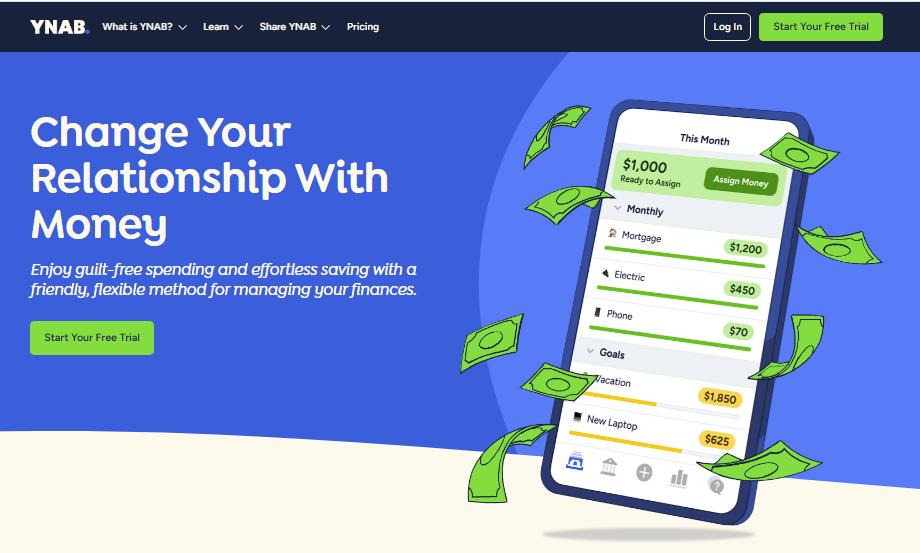
YNAB is one of the most respected budgeting platforms available.
While YNAB isn’t permanently free, many students can access extended trials and educational discounts.
Its philosophy is simple:
Give every dollar a job.
Pros
- Excellent budgeting framework
- Goal tracking
- Strong educational resources
Cons
- Learning curve
- Paid after trial period
Best For
Students serious about building long-term money management habits.
8. Mint Alternatives
Although Mint has been discontinued, several AI-powered alternatives now provide similar features.
These tools typically include:
- Budget creation
- Spending analysis
- Expense categorization
- Savings recommendations
Why Students Like Them
Most offer free versions and beginner-friendly dashboards.
9. Empower Personal Dashboard
Empower offers a powerful financial dashboard that helps users view all accounts in one place.
Pros
- Net worth tracking
- Spending analysis
- Investment visibility
Cons
- More advanced than many students need
Best For
Students interested in long-term wealth building.
10. Spreadsheet + ChatGPT Combination
Surprisingly, one of the most effective free AI finance tools for students is combining a simple spreadsheet with ChatGPT.
Students can:
- Export expenses
- Paste spending data into ChatGPT
- Request analysis
- Identify unnecessary spending
- Build custom budgets
Example Prompt
“Analyze my monthly spending and suggest three ways I can save $100 per month.”
This approach provides highly personalized insights.
Real-World Student Use Cases
Many students assume finance apps are only useful for people with significant income.
That’s not true.
Even small amounts of money benefit from better management.
Managing a Monthly Allowance
Imagine a student receives:
- $500 monthly allowance
- No additional income
Without tracking expenses, that money disappears quickly.
Using free AI finance tools for students, they can see:
| Category | Monthly Spending |
|---|---|
| Food | $180 |
| Transportation | $60 |
| Entertainment | $110 |
| Shopping | $90 |
| Miscellaneous | $60 |
Immediately, spending patterns become clear.
Small adjustments could free up $100–$150 every month.
Saving for Tuition
A student wants to save $1,200 over the next year.
AI budgeting tools can calculate:
Instead of guessing, students receive a structured plan.
Cutting Unnecessary Subscriptions
Many students pay for:
- Netflix
- Spotify
- Cloud storage
- Gaming memberships
- Learning platforms
After a few months, forgotten subscriptions pile up.
AI tools automatically identify recurring payments.
This is one of the fastest ways students save money.
Managing Side Hustle Income
Students earning money through:
- Freelancing
- Content creation
- Tutoring
- Delivery apps
often struggle with budgeting inconsistent income.
AI tools help estimate:
- Average monthly income
- Spending limits
- Savings opportunities
This makes income fluctuations easier to manage.
How AI Helps Students Save More Money

One reason free AI finance tools for students are becoming popular is their ability to identify patterns humans miss.
For example:
You may think food is your largest expense.
The AI might reveal:
- Food = $180
- Ride-sharing = $220
Without data, assumptions can be wrong.
AI turns assumptions into facts.
Common Financial Mistakes Students Make
Understanding mistakes helps explain why these tools are so valuable.
1. Not Tracking Spending
Most students know their balance.
Few know where their money actually goes.
This is the biggest budgeting mistake.
2. Ignoring Small Purchases
A $5 purchase feels harmless.
Thirty $5 purchases equal $150.
AI tools highlight these patterns.
3. No Emergency Fund
Unexpected expenses happen:
- Medical costs
- Car repairs
- Laptop replacements
Students without emergency savings often rely on credit cards.
4. Lifestyle Inflation
When income increases, spending often increases too.
AI tools can help prevent this habit.
5. Budgeting Without Data
Many students create budgets based on guesswork.
AI budgeting uses real spending history.
That makes budgets far more realistic.
Features Students Should Look For
Not every finance app is worth downloading.
Prioritize these features:
Automatic Categorization
The app should sort expenses automatically.
Savings Goals
Goal tracking increases motivation.
Spending Alerts
Notifications prevent overspending.
Subscription Detection
Helps eliminate wasteful expenses.
Budget Recommendations
The best AI tools suggest improvements rather than simply displaying data.
Free vs Paid AI Finance Tools
Many students wonder if free tools are enough.
For most college students, the answer is yes.
| Feature | Free Tools | Paid Tools |
|---|---|---|
| Budget Tracking | Yes | Yes |
| Spending Reports | Yes | Yes |
| Expense Categories | Yes | Yes |
| AI Insights | Often | Better |
| Investment Tracking | Limited | Advanced |
| Premium Support | No | Yes |
For beginners, free tools provide more than enough functionality.
How to Build a Student Budget Using AI
A simple framework:
Step 1
Calculate monthly income.
Include:
- Part-time jobs
- Allowance
- Scholarships
- Side hustles
Step 2
Track spending for 30 days.
Use one of the free AI finance tools for students mentioned above.
Step 3
Identify top spending categories.
Step 4
Set realistic limits.
Step 5
Create a savings goal.
Step 6
Review finances weekly.
Small adjustments create major results over time.
The Hidden Benefit Nobody Talks About
Most people focus on saving money.
But there is another benefit.
Confidence.
Students who understand their finances typically feel:
- More in control
- Less stressed
- Better prepared for emergencies
- More confident about future financial decisions
Money management isn’t only about dollars.
It’s also about reducing uncertainty.
Expert Recommendation
If you’re starting from scratch:
- Use ChatGPT for budgeting advice.
- Use Cleo for daily money awareness.
- Use Rocket Money for subscriptions.
- Use Goodbudget for budgeting discipline.
This combination covers nearly every major student finance need without significant cost.
Are Free AI Finance Tools for Students Safe?
This is one of the most common questions students ask.
The answer depends on the platform you choose.
Most reputable financial apps use:
- Data encryption
- Multi-factor authentication
- Secure servers
- Privacy controls
Before connecting any financial account:
✔ Read the privacy policy
✔ Check user reviews
✔ Enable two-factor authentication
✔ Use strong passwords
✔ Monitor account activity regularly
When used responsibly, most major budgeting tools are considered safe for everyday financial management.
The Future of AI and Student Finance
Artificial intelligence is rapidly changing personal finance.
Over the next few years, students can expect AI tools to become even more helpful.
Future features may include:
- Personalized financial coaching
- Automated savings plans
- Smarter spending predictions
- Student loan optimization
- Real-time financial recommendations
- AI-powered investing education
The students who learn these tools today may gain a significant advantage in managing money throughout adulthood.
How to Choose the Best Free AI Finance Tool
Not every student has the same needs.
Choose based on your goals.
If You Want Better Budgeting
Choose:
- Cleo
- Goodbudget
- PocketGuard
If You Want Financial Education
Choose:
- ChatGPT
- NerdWallet
If You Want Subscription Tracking
Choose:
- Rocket Money
If You Want Long-Term Wealth Building
Choose:
- Empower
- YNAB
If You Want an All-Around Solution
A combination of:
- ChatGPT
- Cleo
- Rocket Money
works extremely well for most college students.
Quick Summary Table
| Goal | Recommended Tool |
|---|---|
| Budgeting | Cleo |
| Expense Tracking | PocketGuard |
| Financial Education | ChatGPT |
| Subscription Management | Rocket Money |
| Savings Goals | Goodbudget |
| Wealth Tracking | Empower |
| Advanced Budgeting | YNAB |
Final Verdict
Managing money in college has never been easy.
Between rising living costs, tuition expenses, and everyday spending, students face financial challenges that can quickly become overwhelming.
The good news is that technology has made financial management more accessible than ever.
The best free AI finance tools for students can help you:
- Track expenses automatically
- Create realistic budgets
- Monitor subscriptions
- Build savings habits
- Reduce financial stress
- Improve money awareness
You don’t need a finance degree to make smarter financial decisions.
You simply need the right tools and the willingness to use them consistently.
Even saving an extra $50 to $100 each month can create meaningful financial progress over time.
Start with one tool.
Build one good habit.
Then keep improving.
Your future self will thank you.
Frequently Asked Questions (FAQ)
What are the best free AI finance tools for students?
Some of the best free AI finance tools for students include ChatGPT, Cleo, Rocket Money, PocketGuard, Goodbudget, and NerdWallet budgeting tools.
Are free AI finance tools for students really free?
Most offer free versions with essential budgeting and money-management features. Some apps also provide premium upgrades with additional functionality.
Can AI help students save money?
Yes.
AI can analyze spending patterns, identify unnecessary expenses, track subscriptions, and recommend ways to reduce spending.
Which free AI finance tool is best for beginners?
Cleo and Goodbudget are often the easiest options for beginners because of their simple interfaces and straightforward budgeting systems.
Are AI budgeting apps better than spreadsheets?
For most students, yes.
AI apps automate tracking and analysis, making budgeting easier and less time-consuming than manual spreadsheets.
Can students use AI tools without connecting bank accounts?
Absolutely.
Many free AI finance tools for students can still provide budgeting guidance and spending analysis through manual data entry.
How often should students review their finances?
A weekly review is ideal.
Checking finances once a week helps identify problems before they become serious.
Do these tools help with student loans?
Some tools provide debt tracking and financial planning features that can help students manage loan repayments more effectively.